Walk into any busy retail store in Dubai and there is a lot happening at once. Customers move between aisles, employees move stock from the back room to the shop floor, deliveries arrive at the loading area, contractors come and go, and security personnel keep an eye on the entrances while trying to remain attentive to everything else. In a large store or a busy shopping environment, hundreds of movements can happen within a matter of minutes, most of them completely ordinary and some of them requiring attention.
Now consider a simple question: who is really on your premises right now, and how much of what is happening can your security team actually see?
For many retailers, the immediate answer would be, “We have CCTV.” That is reassuring to a point. Cameras are installed at entrances, across sales floors, near cash counters, around stockrooms and in other sensitive areas, and footage is continuously recorded. But a surveillance system that can show you what happened yesterday is not necessarily a system that can tell you what needs attention today.
This distinction is becoming increasingly important as retailers across the UAE operate larger stores, multiple outlets and increasingly complex premises. UAE retail store security is no longer simply about putting cameras on walls and keeping recordings for a few weeks. It is about creating enough visibility across the premises to understand activity as it happens and giving security teams the tools to respond when something does not look righ
What Does Your Retail Store See That You Don’t?
The first challenge is not necessarily a lack of cameras. Retail businesses rarely suffer from having absolutely no surveillance. The more common problem is that they have plenty of footage but limited visibility.
A security operator may be looking at several camera feeds simultaneously while customers, employees, delivery personnel and visitors move through different parts of the property. Even with a well-trained team, continuously watching every screen and recognising every unusual movement is difficult. Something may only become significant when viewed in context, but by then the opportunity to intervene may have passed.
This is where the difference between conventional CCTV and intelligent surveillance begins to matter.
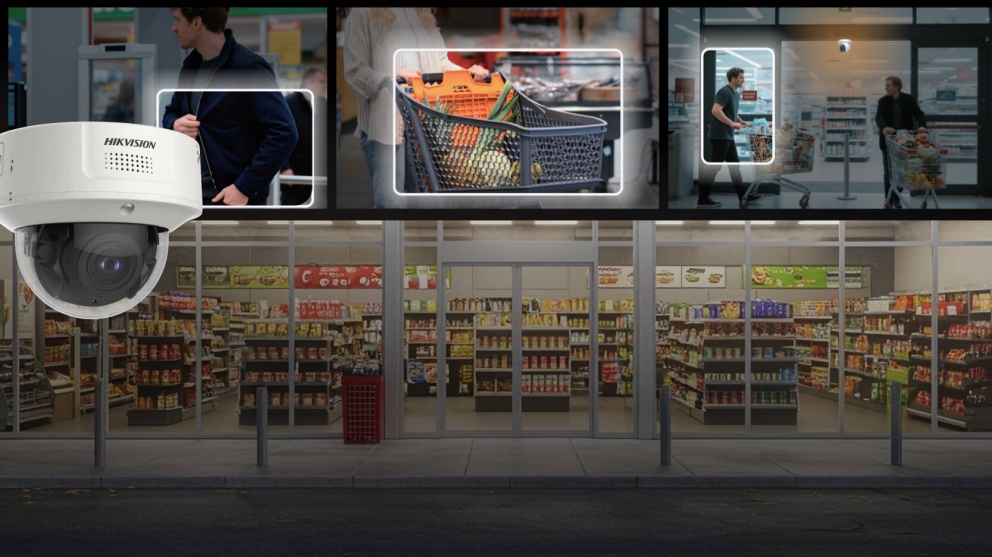
Modern CCTV for retail stores in the UAE can combine high-quality video capture with analytics that help identify specific activities or events. Instead of requiring someone to notice every movement manually, the system can be configured to draw attention to situations that fall outside defined patterns — such as movement into restricted areas, people crossing designated boundaries or unusual activity in areas where security requires greater attention.
The camera is still doing what a camera has always done: seeing and recording. The difference is that the technology around it can make that information considerably more useful.
Is Your CCTV Recording Incidents: Or Helping You Prevent Them?
This is perhaps the most important change in the way retailers should think about surveillance. Traditional CCTV often becomes most valuable after an incident. A product goes missing, an unauthorised person enters an area, an argument takes place at a checkout counter or property is damaged, and someone goes back through hours of recordings looking for an explanation. The footage may reveal exactly what happened, but only after the event has already taken place. Intelligent surveillance introduces another possibility.
What if the system could help bring a particular event to the attention of the security team while it was taking place?
Video analytics can be used to monitor defined areas and identify activities that warrant attention. In a retail environment, this could mean monitoring entrances and exits, sensitive stock areas, restricted zones, loading areas or sections of the store where unusual activity needs to be identified quickly.
That does not mean technology replaces security personnel. Quite the opposite. The purpose is to make human attention more effective by reducing the amount of visual information that an operator has to process manually.
For retailers, that can turn surveillance from a passive record of the past into a more useful source of real-time operational awareness.
A Retail Store Has More Than One Security Boundary
One reason retail surveillance becomes complicated is that a store does not have a single security perimeter. There is the customer entrance, where the business wants an open and welcoming environment. There are staff entrances where access needs to be more controlled. There are stockrooms and warehouses containing valuable inventory. There may be loading bays, parking areas, service corridors and other spaces that customers never see but which are essential to the operation of the business.
Each area presents a different security requirement. A camera positioned at the main entrance serves a different purpose from one monitoring a warehouse aisle. A surveillance system covering a car park has different considerations from one monitoring a checkout area. Treating all of these locations simply as “CCTV coverage” overlooks the way a retail environment actually operates.
This is why effective retail security solutions in the UAE need to begin with the premises itself: how people move through it, which areas are public, which are restricted, where valuable assets are kept and where an incident could have the greatest operational impact. Once that picture is clear, surveillance technology can be designed around it rather than cameras being installed simply because a particular location appears to need one.
From CCTV Footage to Video Intelligence
The real value of modern surveillance isn't necessarily the number of cameras installed. It is what the system can understand from the footage. Intelligent video analytics can help identify defined activities and trigger alerts when specific events occur.
Depending on the solution and configuration, retailers can use analytics for scenarios such as:
- Unusual movement
- Restricted-area access
- Line crossing
- Loitering
- Crowd detection
- Perimeter monitoring
- Unauthorised activity
- Specific events requiring security attention
For a busy UAE retail environment, this can make surveillance more useful than simply having multiple screens displaying live camera feeds. Instead of expecting security personnel to watch everything simultaneously, the system can help direct attention toward events that matter.
Where Hikvision Fits Into the Picture
For retailers considering Hikvision CCTV for retail, the value should not be viewed solely in terms of camera specifications. A modern surveillance environment can bring together cameras, recording infrastructure and intelligent video analytics to provide different levels of visibility across a property. Hikvision's surveillance ecosystem allows businesses to build surveillance environments around different requirements, from individual retail outlets to larger and more complex deployments.
The important consideration for a retailer is not simply whether a camera can produce a clear image. It is whether the surveillance architecture provides useful coverage, whether relevant events can be identified efficiently, and whether recorded information can be retrieved when it is needed.
That is also where NVR and DVR systems remain important. Intelligent analytics may help identify an event, but reliable recording provides the evidence and historical context required to investigate it afterwards.
In practical terms, a retailer may need to understand not only what occurred at a particular moment but also what happened before and after it. Was someone authorised to enter the area? Did another person follow them? Was the incident isolated or part of a recurring pattern? Good surveillance infrastructure gives security teams the ability to answer those questions without relying entirely on memory or assumptions.
Security Doesn't End Where the Camera Ends
There is another part of retail security that is easy to overlook: what happens when surveillance identifies something?
Imagine a person approaching a controlled entrance after business hours. A camera can capture the activity and, where appropriate, analytics can bring it to the attention of security personnel. But visibility alone does not control the door.
This is where a broader ELV solution for retail in the UAE becomes relevant.
Access control can determine who is permitted to enter particular areas. Intercom systems can allow personnel to communicate with visitors or staff at controlled access points. Gate barriers can regulate vehicle movement around parking or service areas. Surveillance can provide the visual context while these other systems provide mechanisms for controlling or managing access. The individual technologies are useful on their own, but their real value becomes clearer when they are considered as parts of the same security environment.
A retail business does not experience security incidents as separate “CCTV problems”, “access-control problems” or “gate-barrier problems”. It experiences one event, and the technology supporting the business needs to make sense of that event as a whole.
The Connection Between Security and Retail Loss
For retailers, the consequences of inadequate visibility are not limited to dramatic security incidents. Inventory shrinkage, unauthorised access, misplaced stock, disputes and unexplained losses can all create operational and financial pressure. Surveillance cannot eliminate every cause of retail loss, but it can provide an important layer of accountability and visibility.
When cameras cover the right locations and recordings can be searched and reviewed efficiently, businesses have a better opportunity to understand where an issue occurred and what preceded it. When analytics are introduced, security teams can also focus more closely on events that match predefined risk conditions.
This is particularly useful in larger retail environments, where simply increasing the number of cameras does not necessarily solve the problem. More cameras can actually create more information for a security team to process. The objective, therefore, should not be more footage. It should be more meaningful visibility.
The Challenge Gets Bigger When the Business Gets Bigger
A retailer operating one store may be able to maintain a high degree of familiarity with its premises. As the business expands across multiple outlets, however, maintaining the same level of visibility becomes considerably more difficult.
A store in Dubai may operate differently from another outlet in Abu Dhabi or Sharjah. The physical layout, customer volume, operating hours and security requirements may differ. Yet the business may still want a consistent approach to surveillance and access management across its locations. This makes scalability an important part of retail security systems in Dubai and across the UAE.
The question is not only whether today's security system can protect today's store. It is whether the architecture can accommodate tomorrow's additional cameras, locations, storage requirements and security controls without becoming unnecessarily complicated.
A well-planned surveillance environment should therefore be designed with the business's current requirements in mind while leaving room for future expansion.
So, Who Is Really on Your Premises?
That question sounds simple until you try to answer it.
You may know how many cameras are installed. You may know how long footage is retained. You may even know exactly where every camera is positioned.
But knowing where your cameras are is not the same as knowing what your premises are telling you.
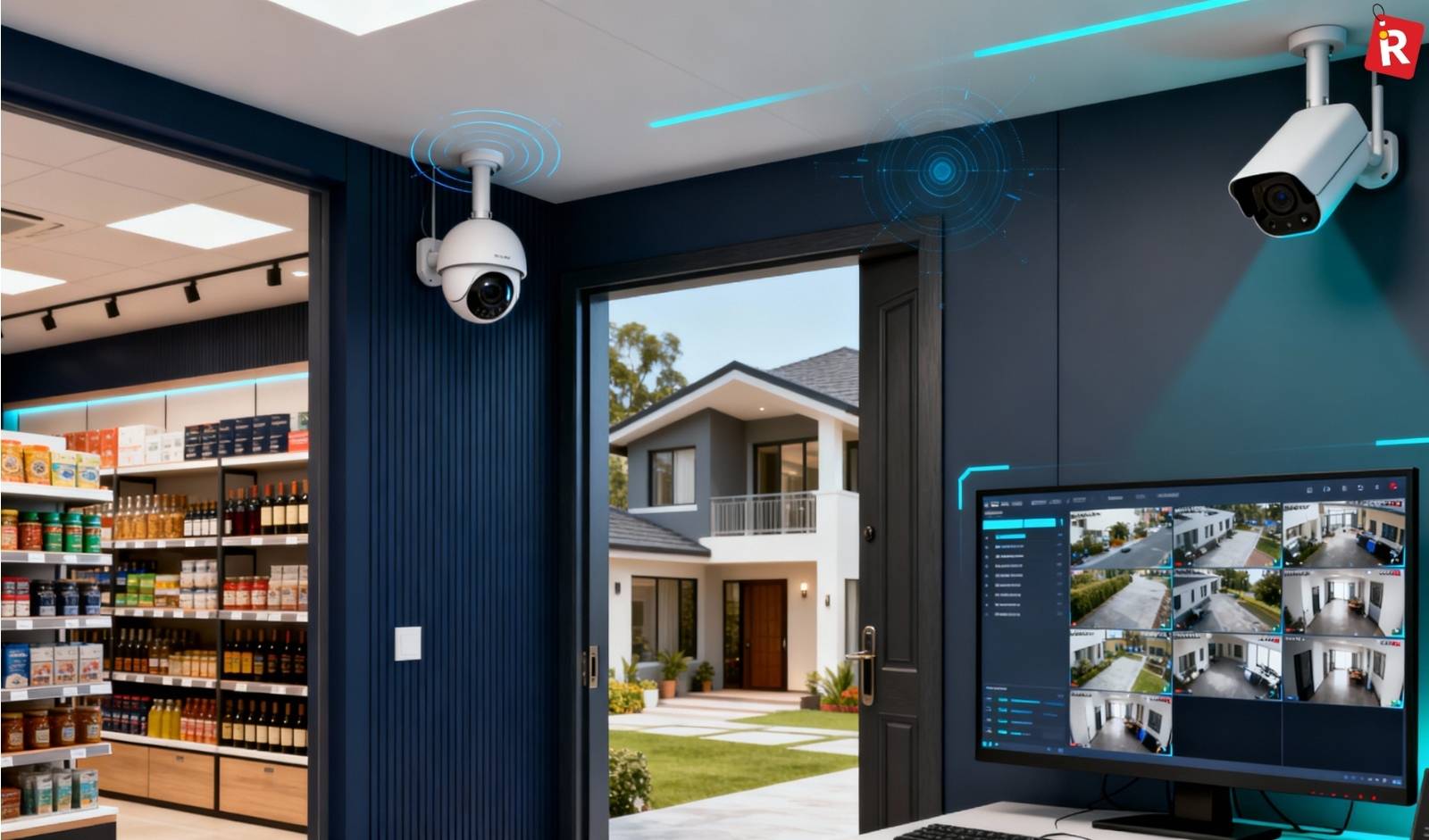
Effective UAE retail store security is ultimately about turning the physical environment into something your security team can understand. Cameras provide sight. Video analytics can provide intelligence. NVR and DVR systems provide recorded evidence. Access control, intercoms and gate barriers provide additional layers of control.
When these technologies are planned as one environment, a retailer can move beyond the traditional idea of CCTV as a device that simply records an incident.
The bigger opportunity is to create a security system that helps the business see, understand and respond. Because when hundreds of people can move through a retail environment in the space of an hour, security cannot depend entirely on someone happening to notice the one movement that matters.
The question isn't whether your store has CCTV.
The question is whether your CCTV knows what matters.
Interdev Technology helps businesses across the UAE design and implement CCTV, ELV, access control and integrated security solutions based on their premises, operational requirements and growth plans.
.webp)